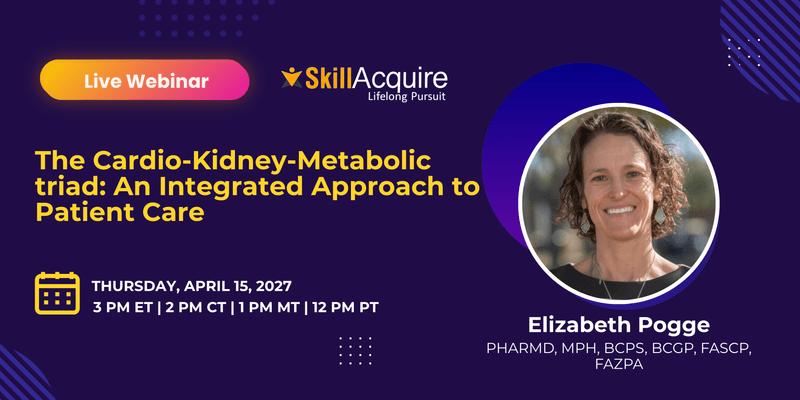
Presenter: Elizabeth Pogge, PharmD, MPH, BCPS, BCGP, FASCP, FAzPA
Date: Thursday, April 15, 2027
Time: 3 pm ET | 2 pm CT | 1 pm MT | 12 pm PT
Duration: 60 minutes
Course Description
Cardiovascular-kidney-metabolic (CKM) syndrome represents an interconnected group of health conditions involving cardiovascular disease, kidney disease, metabolic risk factors, diabetes, and obesity. These conditions frequently coexist and contribute to increased risks of cardiovascular complications, chronic kidney disease progression, and adverse health outcomes. Healthcare professionals need an integrated, patient-centered approach to identify risk early and implement effective treatment strategies.
This webinar will explore the definition, staging, and clinical implications of CKM syndrome in adults with obesity, diabetes, and other metabolic risk factors. Participants will review updated risk assessment approaches, including the PREVENT score, and learn how to identify subclinical cardiovascular and kidney disease to support earlier intervention and improved patient outcomes.
The session will discuss evidence-based lifestyle modifications and current treatment strategies for managing cardiovascular and renal risks. Particular attention will be given to the role of mineralocorticoid receptor antagonists (MRAs), including finerenone, sodium-glucose cotransporter-2 inhibitors (SGLT2i), glucagon-like peptide-1 receptor agonists (GLP-1 RA), statins, and renin-angiotensin-aldosterone system inhibitors (RAASi).
Additionally, participants will examine relevant clinical trial evidence, therapeutic goals, and individualized treatment approaches for patients with CKM syndrome. Through a patient case discussion, the webinar will highlight medication-related problems, potential complications, adverse effects, and appropriate monitoring strategies.
By emphasizing integrated risk assessment, evidence-based pharmacological management, and individualized patient care, this webinar will help healthcare professionals improve cardiovascular and kidney health outcomes in patients with CKM syndrome.
Learning Outcomes
- Define cardiovascular-kidney-metabolic (CKM) syndrome and describe its clinical stages and associated health risks.
- Apply the updated PREVENT risk assessment approach to evaluate cardiovascular risk in patients with CKM syndrome.
- Identify subclinical cardiovascular and kidney disease and recognize opportunities for early intervention.
- Discuss evidence-based lifestyle modifications that support cardiovascular, kidney, and metabolic health.
- Evaluate treatment approaches for obesity and type 2 diabetes in patients with CKM syndrome.
- Describe current strategies for reducing cardiovascular disease risk in patients with CKM syndrome.
- Discuss evidence-based approaches to managing chronic kidney disease and reducing the risk of disease progression.
- Compare the clinical roles of SGLT2 inhibitors, GLP-1 receptor agonists, mineralocorticoid receptor antagonists, statins, and RAAS inhibitors.
- Review relevant clinical trial evidence supporting current pharmacological treatment strategies.
- Establish individualized therapeutic goals based on patient-specific cardiovascular, kidney, and metabolic risk factors.
- Identify medication-related problems, adverse effects, potential complications, and appropriate monitoring requirements.
- Apply an integrated treatment approach to manage a patient case involving CKM syndrome.
Areas Covered in the Session
-
Overview of Cardiovascular-Kidney-Metabolic (CKM) Syndrome
- Definition and clinical significance of CKM syndrome.
- CKM syndrome stages and associated risk factors.
- Relationship between cardiovascular disease, kidney disease, obesity, and metabolic disorders.
-
Risk Assessment and the PREVENT Score
- Updated approaches to cardiovascular risk assessment.
- Application of the PREVENT score in clinical practice.
- Identifying patients who may benefit from early intervention.
-
Identification of Subclinical Disease
- Recognizing early cardiovascular and kidney disease.
- Clinical indicators and risk factors associated with disease progression.
- Opportunities for early diagnosis and preventive management.
-
Lifestyle Modifications and Risk Reduction
- Nutrition and dietary approaches for cardiometabolic health.
- Physical activity and weight management strategies.
- Lifestyle interventions to reduce cardiovascular and kidney risks.
-
Management of Metabolic Disease
- Treatment approaches for obesity and type 2 diabetes.
- Selection of therapies based on patient-specific risk factors.
- Integrating metabolic risk reduction into CKM management.
-
Cardiovascular Disease Management
- Strategies for reducing cardiovascular risk.
- Role of statins and RAAS inhibitors in cardiovascular risk management.
- Individualizing cardiovascular treatment goals.
-
Kidney Disease Management
- Identifying and managing chronic kidney disease in patients with CKM syndrome.
- Strategies to reduce kidney disease progression.
- Role of kidney-protective pharmacological therapies.
-
Pharmacological Treatment Strategies
- Clinical applications of SGLT2 inhibitors and GLP-1 receptor agonists.
- Role of mineralocorticoid receptor antagonists, including finerenone.
- Use of statins and RAAS inhibitors in integrated CKM management.
- Clinical trial evidence supporting current treatment recommendations.
-
Medication Safety and Monitoring
- Identifying medication-related problems and potential complications.
- Recognizing adverse effects and drug-related safety concerns.
- Appropriate laboratory and clinical monitoring strategies.
-
Case-Based Discussion and Individualized Treatment
- Applying CKM staging and risk assessment to a patient case.
- Selecting appropriate evidence-based treatment strategies.
- Developing individualized therapeutic goals and monitoring plans.
Recommended Participants
- Clinical Pharmacists
- Retail and Community Pharmacists
- Internal Medicine Physicians (MD, DO, PA, NP)
- Endocrinologists (MD, DO, PA, NP)
- Cardiologists (MD, DO, PA, NP)
- Nephrologists (MD, DO, PA, NP)
- Primary Care Physicians and Family Medicine Practitioners
- Ambulatory Care Pharmacists
- Pharmacotherapy Specialists
- Diabetes Care and Education Specialists
- Nurse Practitioners and Physician Assistants specializing in Chronic Disease Management
- Clinical Pharmacy Managers and MTM Specialists
About the Presenter
Dr. Elizabeth Pogge, PharmD, MPH, BCPS, BCGP, FASCP, FAzPA is an ambulatory care pharmacist specializing in cardiometabolic disease. She is a Professor at Midwestern University College of Pharmacy–Glendale and a clinical pharmacist at Cardiac Solutions in Peoria, Arizona.
Her professional interests include preceptor development, geriatrics, education, diabetes, and cardiology. Her research, scholarship, and teaching activities focus on teaching and learning, cardiology, and lifestyle modification.
Dr. Pogge has delivered more than 50 national and regional presentations at professional organizations and conferences, including ASHP, APhA, AACP, ASCP, and AzPA.
Additional Information
After Registration:
You will receive an email with login information and handouts (presentation slides) that you can print and share with all participants at your location.
System Requirement:
- Internet Speed: Preferably above 1 Mbps
- Headset: Any decent headset and microphone which can be used to talk and hear clearly
Can't Listen Live?
No problem. You can get access to an On-Demand webinar. Use it as a training tool at your convenience.
Snippet From Our Previous Session
|